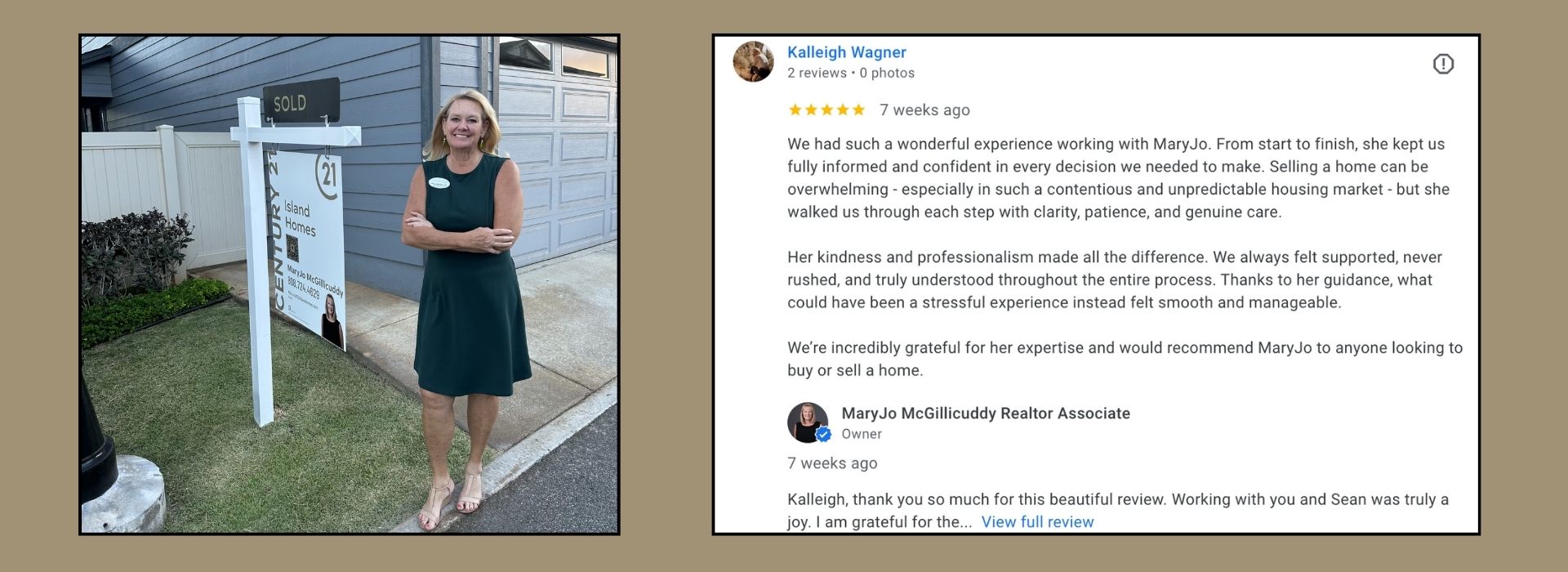
Ewa Beach Realtor Reviews: What Clients Should Expect (2026 Guide)
Quick answer: The best Ewa Beach Realtor reviews usually mention the same things: fast communication, honest guidance, strong negotiation, and a smooth escrow process. This page explains what “5-star service” should actually look like when you’re buying or selling a home in Ewa Beach, Hawaii.
I’m MaryJo McGillicuddy with Century 21 Island Homes. I work with buyers and sellers in Ewa Beach, Ocean Pointe, Kapolei, and surrounding West Oʻahu communities. If you want help right away, feel free to call or text me anytime.
What Ewa Beach Realtor Reviews Should Tell You (Beyond “5 Stars”)
Most people don’t want a “salesperson.” They want a local professional who makes the process feel clear and manageable. In real estate, a great experience usually comes down to the same few things:
Clear communication (so you’re never guessing what’s happening)
Local knowledge (so you don’t buy the wrong house for your lifestyle)
Pricing confidence (so you don’t overpay or undersell)
Strong negotiation (so you’re protected without killing the deal)
Escrow guidance (so deadlines and paperwork don’t become stressful)
What 5-Star Service Looks Like in Ewa Beach Real Estate
When you read great reviews about a realtor in Ewa Beach, the details usually sound like this:
Quick responses: calls and texts are returned fast, especially during active negotiations.
Honest advice: you get the truth about pricing, condition, and what’s realistic.
Strong coordination: inspections, escrow, lenders, and timelines are handled smoothly.
Less stress: you feel guided and protected instead of overwhelmed.
Communication Standards (What You Should Expect)
Communication is one of the biggest reasons people leave strong realtor reviews. Here’s what you should expect from a top agent in Ewa Beach:
Fast answers when you’re deciding whether to tour a home or write an offer
Clear updates during escrow so you always know what’s next
No surprises on deadlines, paperwork, or required steps
How Escrow Updates Should Work (Simple and Predictable)
Escrow can feel confusing if you haven’t bought or sold in Hawaii before. A great realtor keeps it simple and predictable. You should expect guidance on:
Offer acceptance: what happens immediately after the seller says yes
Inspections: how scheduling works and what to look for
Appraisal: what it means and how it can affect the deal
Repairs / credits: what’s normal to request and how negotiations usually go
Final walkthrough + closing: what to verify before keys are handed over
What MaryJo Does Differently
Every agent can open a door. My goal is to make sure you feel confident about the home, the price, and the plan. I focus on:
Neighborhood fit: helping you choose the right part of Ewa Beach for your lifestyle
Practical guidance: straight answers on what’s realistic and what’s not
Protecting your money: clear pricing strategy and smart negotiation
Step-by-step clarity: you always know what happens next
Military Buyers and PCS Moves (Quick Note)
If you’re relocating to Oʻahu on PCS orders, timing matters and decisions can feel rushed. When my husband was on active duty, we learned quickly that moving to Hawaii isn’t just about finding a house — it’s about finding a location that makes daily life easier. Commute, base access, and routine matter.
If you’d like help narrowing down Ewa Beach and West Oʻahu options, feel free to call or text me anytime.
What should I look for in Ewa Beach Realtor reviews?
Look for reviews that mention fast communication, honest pricing guidance, strong negotiation, and a smooth escrow process. Those are usually the signs of a high-quality local agent.
Do realtor reviews matter in Hawaii?
Yes. Reviews can help you understand how an agent communicates, how organized they are, and what the experience feels like during escrow and negotiations.
How do I choose the right realtor in Ewa Beach?
Choose someone who knows the local neighborhoods, responds quickly, explains the process clearly, and makes you feel confident from the first showing to closing.
Best Ewa Beach Realtor (2026): How to Choose the Right Agent
Quick answer: The best Ewa Beach Realtor is the one who communicates fast, knows the micro-neighborhoods, and protects you through pricing, negotiation, and escrow. This guide shows you exactly how to choose the right agent (and the questions you should ask before you commit).
I’m MaryJo McGillicuddy with Century 21 Island Homes. I work with buyers and sellers in Ewa Beach, Ocean Pointe, Kapolei, and surrounding West Oʻahu communities. If you want help right away, feel free to call or text me anytime.
What Most People Mean When They Search “Best Ewa Beach Realtor”
Most buyers and sellers aren’t looking for a fancy title. They’re looking for an agent who will:
Answer quickly (especially when a home hits the market)
Be honest about pricing and condition
Explain the process clearly so you’re not guessing
Protect you in escrow and catch problems early
Know Ewa Beach like a local, not just a map
7 Questions to Ask Any Ewa Beach Realtor Before You Hire Them
1) How well do you know the different parts of Ewa Beach?
Ewa Beach isn’t one neighborhood. Ocean Pointe, Ewa Gentry, and other areas each feel different, price differently, and attract different buyers. A great agent can explain the real-life differences quickly.
2) How fast do you respond to calls and texts?
Speed matters in Hawaii real estate. If you can’t get a quick response, you may miss opportunities or feel stressed during negotiations.
3) What do you think is happening with pricing right now?
A strong agent should be able to explain what homes are actually selling for, how long they’re taking to sell, and what buyers are doing in today’s market.
4) How do you help buyers avoid overpaying?
Great agents don’t just show homes. They help you understand value, condition, resale, and what a “good deal” looks like in Ewa Beach.
5) How do you handle negotiations?
You want an agent who can protect you while keeping the deal alive. Negotiation isn’t about being aggressive — it’s about being strategic.
6) What problems do you see most often in Ewa Beach homes?
Every area has common issues buyers should understand (maintenance, repairs, layout tradeoffs, HOA rules for condos, and more). A local agent will know what to look for and what questions to ask.
7) What will the process look like from offer to closing?
A great agent explains what happens next before you need to ask. That includes timelines, inspections, appraisals, lender steps, and escrow milestones.
Red Flags: Signs You Should Choose a Different Agent
They pressure you to make decisions fast without explaining why
They avoid giving clear answers about pricing
They feel hard to reach or slow to respond
They don’t know the difference between Ewa Beach micro-neighborhoods
They focus on “selling you” instead of guiding you
What Great Ewa Beach Realtors Do Differently
In my experience, the best agents help clients feel calm and confident because they do the basics extremely well:
They communicate clearly and keep you updated
They set realistic expectations so you don’t waste time
They spot problems early before they become expensive surprises
They understand lifestyle fit, not just bedrooms and bathrooms
Military Relocation to Oʻahu (Quick Note)
If you’re moving to Hawaii on PCS orders, choosing the right realtor matters even more. When my husband was on active duty, we learned quickly that moving to Hawaii isn’t just about the house — it’s about the daily routine, commute reality, and finding a neighborhood that makes life easier.
If you’d like help narrowing down Ewa Beach and West Oʻahu areas based on your commute and lifestyle, feel free to call or text me anytime.
Want a straight answer?
Text MaryJo your budget and timeline and I’ll tell you what’s realistic in Ewa Beach right now.
📞 (808) 724-4629
The best realtor in Ewa Beach is the one who knows the local neighborhoods, communicates fast, and protects you during negotiation and escrow. If you want help right away, call or text MaryJo at (808) 724-4629.
How do I find a top realtor in Ewa Beach?
Look for a local agent with clear communication, strong neighborhood knowledge, and a process that makes you feel informed and confident from the first showing to closing.
Do I need a buyer’s agent in Ewa Beach?
Most buyers benefit from having their own representation to evaluate pricing, condition, disclosures, and negotiation strategy — especially in a competitive market.
Best Ewa Beach Realtor (Local Expert Guide + Homes for Sale)
Quick answer: If you’re looking for the best Ewa Beach Realtor, you want someone who knows the micro-neighborhoods, pricing patterns, and what homes are actually selling for (not just what they’re listed for). I’m MaryJo McGillicuddy with Century 21 Island Homes. I help buyers and sellers in Ewa Beach, Ocean Pointe, and the surrounding West Oʻahu communities, and I’m happy to give you straight, practical guidance.
Have a quick question about real estate in Hawaii?
When people search “best Ewa Beach realtor,” they usually want three things: fast, clear communication, local knowledge that prevents mistakes, and an agent who can protect them in negotiation. The difference between a good experience and a stressful one often comes down to details like HOA rules, flood zones, solar leases, condition issues, and realistic pricing—not just opening doors.
My promise: I’ll tell you what’s realistic in Ewa Beach right now, what’s overpriced, and what to watch out for—without wasting your time.
Ewa Beach Real Estate: Micro-Neighborhoods Matter
Ewa Beach isn’t one “thing.” Price, lifestyle, and even daily convenience can change block to block. In my experience, buyers do best when they choose based on how they actually live, commute, parking, schools, HOA tolerance, yard space, and whether they want newer construction or a more established neighborhood feel.
Ocean Pointe: Popular for newer homes, clean neighborhoods, and a “planned community” feel.
Ewa Gentry / Ewa by Gentry: Often a strong value for buyers who want community amenities and neighborhood variety.
Hoakalei area: For buyers who care about golf lifestyle, community layout, and overall feel.
Ewa Beach Realtor Near Me (Yes, This Matters)
If you searched “Ewa Beach real estate agent near me,” you’re probably trying to avoid a big portal lead funnel. You should. Working with a local agent means you get accurate neighborhood guidance, quick showings, and realistic advice about homes you’re considering—especially in a market where the best opportunities can move fast.
Buying in Ewa Beach: What I Tell Clients Up Front
1) Be clear on must-haves vs nice-to-haves. That’s how you stay confident when multiple listings look tempting.
2) Be honest about monthly comfort. On Oʻahu, the monthly payment often includes HOA dues (if a condo), insurance, and maintenance reality.
3) Don’t buy on a map. Traffic patterns, trade winds, noise, and parking matter more here than most mainland buyers expect.
Selling in Ewa Beach: Pricing and Presentation Win
If you’re selling, the “best realtor” is the one who can help you position your home correctly. That means pricing strategy, preparing the home for photos and showings, and making sure buyers understand the value without guessing. Small details like repairs, disclosures, staging choices, and timing can change final price and days on market.
Military Buyers and PCS Moves
I work with military families relocating to Oʻahu, and I understand the timing pressure and the practical realities that come with PCS moves. When my husband was on active duty, we learned quickly that Hawaii isn’t just about finding a house—it’s about finding a location that makes daily life easier. Commute, base access, and daily routines matter.
If you’re military: feel free to call or text me anytime. I can help you narrow down which Ewa Beach neighborhoods are the best fit based on your needs and desires.
Homes for Sale in Ewa Beach
If you’d like, I can send you a short list of Ewa Beach homes that fit your budget, plus a few options that I think are worth seeing in person.
Fastest way to get help:
Text MaryJo at (808) 724-4629 with your budget + timeline + must-haves.
I’ll reply with what’s realistic in Ewa Beach right now and the best neighborhoods for your goals.
Why Clients Choose MaryJo
Local, practical guidance: I focus on real-life fit—commute, neighborhood feel, costs, and resale.
Clear communication: You won’t wonder what’s happening or what comes next.
Negotiation + protection: I help you avoid common buyer and seller mistakes that cost money.
What Different Budgets Actually Buy on Oʻahu
Oʻahu home prices vary widely depending on neighborhood, views, and proximity to the ocean.
The table below shows a realistic snapshot of what buyers typically find across several price points
when comparing condominiums and single-family homes.
Budget
Typical Condo
Typical House
Common Locations
Typical Features
$700K
1–2 bed condo 700–1,000 sq ft
Rare; small older home or fixer 900–1,200 sq ft
Waipahu, Honolulu condos
Starter properties, shared amenities
$900K
2–3 bed condo or townhouse 900–1,300 sq ft
Small single-family home 1,100–1,600 sq ft
Ewa Beach, Kapolei, Waipahu
Entry-level homes, modest lots
$1M
Luxury condo or penthouse 1,000–1,500 sq ft
Entry-level single-family 1,400–1,900 sq ft
Ewa Beach, Kapolei, Mililani
Family neighborhoods, newer communities
$1.5M
High-end condo with views 1,200–1,800 sq ft
Mid-size single-family 1,900–2,600 sq ft
Mililani, Hawaii Kai, Kailua
Better finishes, larger yards
$2M
Luxury condo or penthouse 1,500–2,200 sq ft
Upscale single-family home 2,200–3,200 sq ft
Hawaii Kai, Kailua, Honolulu hillsides
Ocean views, renovated homes
$2.5M
Ultra-luxury condo 1,800–2,500 sq ft
Luxury single-family 2,800–4,000 sq ft
Kahala, Hawaii Kai waterfront
Premium construction, large lanais
$3M
Luxury penthouse 2,000–3,000 sq ft
Luxury estate home 3,500–5,000+ sq ft
Kahala, Diamond Head, Kailua
Ocean views, large lots, architectural homes
Because land on Oʻahu is limited, housing prices often reflect location and views more than sheer square footage.
Oceanfront or hillside view homes can command significantly higher prices even when the home itself is not dramatically larger.
Disclaimer: These examples are intended to provide a general snapshot of the Oʻahu housing market.
Actual home prices and features can vary widely depending on neighborhood, views, condition,
and market conditions at the time of purchase. If you are considering buying a home on Oʻahu,
it is always best to review current listings and speak with a local real estate professional.
FAQs: Best Ewa Beach Realtor
Who is the best realtor in Ewa Beach?
The best realtor in Ewa Beach is the one who understands the micro-neighborhoods, communicates clearly, and protects you through the offer and escrow process. If you want straight guidance, call or text MaryJo at (808) 724-4629.
Do I need an Ewa Beach buyer’s agent?
Most buyers benefit from having their own representation, especially when evaluating pricing, condition, disclosures, and negotiation strategy. A local agent can also help you avoid homes that look great online but don’t fit your real needs.
What’s the best neighborhood in Ewa Beach?
It depends on your commute, budget, HOA tolerance, and lifestyle. Ocean Pointe, Ewa Gentry, and other parts of Ewa Beach each have different benefits. I can help you match the neighborhood to your priorities.
Is Ewa Beach a good place to live?
For many families, yes. Ewa Beach offers a strong community feel, access to West Oʻahu amenities, and a range of homes from condos to single-family neighborhoods.
What Is O-4 BAH at Schofield Barracks? (2026 Hawaii BAH Explained)
Quick answer: 2026 Hawaii BAH for a Major stationed at Schofield Barracks is $4,737 a month with dependents and $4,110 without dependents. O-4 BAH at Schofield Barracks is the same as O-4 BAH anywhere on Oʻahu (Honolulu County). The exact monthly amount depends on whether you have dependents or not.
Why Schofield BAH = Honolulu County BAH
Here’s the part most people don’t realize at first: Schofield Barracks is on Oʻahu, and BAH is set by the DoD based on the local housing market for the area you’re assigned to. On Oʻahu, that generally means your BAH rate is tied to Honolulu County — not a separate “Schofield-only” number.
So if you’re an O-4, your BAH is based on your pay grade and whether you have dependents. That’s why you’ll see two different rates (with dependents vs without dependents), but you won’t see different BAH just because you live closer to Schofield, Wheeler, Pearl Harbor, or Kaneohe.
Hawaii BAH 2026 Mortgage Calculator
Want a quick ballpark idea of what your full BAH could support as a monthly mortgage payment? Use the calculator below.
Hawaii BAH 2026 Mortgage Calculator
Find out how much home your full BAH could buy.
Have a quick question about real estate in Hawaii?
In real life, the bigger question isn’t “What’s the exact BAH number?” — it’s what lifestyle and commute you want. Many Schofield families look at areas like Mililani, Wahiawā, Waipio, and sometimes Pearl City depending on schools, traffic, and whether you want a newer home, a larger yard, or easier access to town.
One honest thing I tell military families: you can absolutely make BAH work on Oʻahu, but the best results come from being clear about your “must-haves” vs “nice-to-haves” (bedrooms, parking, yard, HOA, commute time, and whether you’re open to a condo vs single-family).
A quick personal note (military reality)
When my husband was on active duty, we learned quickly that moving to Hawaii isn’t just about finding a house — it’s about finding a location that makes daily life easier. Commute time, base access, schools, and even simple things like grocery runs and after-school activities matter a lot more here than people expect.
Want help matching your BAH to the right neighborhood?
If you’re an O-4 heading to Schofield Barracks and you want a straight answer on what’s realistic right now, I’m happy to help.
If you're PCSing to Hawaii, most military families choose neighborhoods based on commute to their base. These guides explain where service members typically live and what the daily drive looks like.
Oʻahu home prices vary widely depending on neighborhood, views, and proximity to the ocean.
The table below shows a realistic snapshot of what buyers typically find across several price points
when comparing condominiums and single-family homes.
Budget
Typical Condo
Typical House
Common Locations
Typical Features
$700K
1–2 bed condo 700–1,000 sq ft
Rare; small older home or fixer 900–1,200 sq ft
Waipahu, Honolulu condos
Starter properties, shared amenities
$900K
2–3 bed condo or townhouse 900–1,300 sq ft
Small single-family home 1,100–1,600 sq ft
Ewa Beach, Kapolei, Waipahu
Entry-level homes, modest lots
$1M
Luxury condo or penthouse 1,000–1,500 sq ft
Entry-level single-family 1,400–1,900 sq ft
Ewa Beach, Kapolei, Mililani
Family neighborhoods, newer communities
$1.5M
High-end condo with views 1,200–1,800 sq ft
Mid-size single-family 1,900–2,600 sq ft
Mililani, Hawaii Kai, Kailua
Better finishes, larger yards
$2M
Luxury condo or penthouse 1,500–2,200 sq ft
Upscale single-family home 2,200–3,200 sq ft
Hawaii Kai, Kailua, Honolulu hillsides
Ocean views, renovated homes
$2.5M
Ultra-luxury condo 1,800–2,500 sq ft
Luxury single-family 2,800–4,000 sq ft
Kahala, Hawaii Kai waterfront
Premium construction, large lanais
$3M
Luxury penthouse 2,000–3,000 sq ft
Luxury estate home 3,500–5,000+ sq ft
Kahala, Diamond Head, Kailua
Ocean views, large lots, architectural homes
Because land on Oʻahu is limited, housing prices often reflect location and views more than sheer square footage.
Oceanfront or hillside view homes can command significantly higher prices even when the home itself is not dramatically larger.
Disclaimer: These examples are intended to provide a general snapshot of the Oʻahu housing market.
Actual home prices and features can vary widely depending on neighborhood, views, condition,
and market conditions at the time of purchase. If you are considering buying a home on Oʻahu,
it is always best to review current listings and speak with a local real estate professional.
Which Island Houses Hawaii’s Army Base?
If you are wondering which Hawaiian island has the main U.S. Army base, the answer is Oahu. Schofield Barracks, the best-known Army installation in Hawaii, is located in Central Oahu near Wahiawa and Mililani.
Schofield Barracks Is on Oahu
For military families getting orders to Hawaii, this is usually one of the first questions that comes up. Schofield Barracks is on the island of Oahu, not the Big Island, Maui, or Kauai. It sits in Central Oahu, which gives service members access to several different off-base communities depending on commute, budget, and lifestyle.
That matters because once you know Schofield Barracks is on Oahu, the next question is usually not about geography. It is about where military families actually live, how long the commute takes, and whether it makes more sense to live on base or off base.
Why This Matters for PCS Families
Knowing the base is on Oahu helps narrow down your housing search quickly. Families assigned to Schofield Barracks often look first at places like Mililani, Wahiawa, Kapolei, and Ewa Beach. Each area offers a different mix of commute time, home prices, schools, neighborhood feel, and day-to-day convenience.
Quick Oahu Reality Check
Even though Schofield Barracks is in Central Oahu, people do not all live right next to the gate. Some families prioritize a shorter commute. Others want newer homes, more inventory, or a different lifestyle and are willing to drive farther. That is why understanding both the base location and the surrounding neighborhoods is so important before choosing where to live.
Have a quick question about real estate in Hawaii?
Schofield Barracks is primarily known for being home to the 25th Infantry Division ("Tropic Lightning") and its strategic importance in the Asia-Pacific region. It also boasts a rich history dating back to 1908.
Can civilians live on Schofield Barracks?
While on-base housing is reserved for active duty military personnel and their families, civilians can find a variety of housing options in the surrounding areas on Oahu.
What are the schooling options for children living at Schofield Barracks?
The Department of Defense Education Activity (DoDEA) operates several schools on base, catering to children from kindergarten through high school.
The base also offers support services to assist with educational transitions for military children attending schools off-base.
Living on Oahu
What are the benefits of living near Schofield Barracks?
Living near Schofield Barracks offers the unique blend of military life with the beauty and cultural richness of Oahu. You'll have access to stunning beaches, outdoor activities, and vibrant communities.
What are some challenges of living in Hawaii?
Hawaii has a higher cost of living compared to the national average, particularly when it comes to housing. However, various allowances can help offset these costs for military families.
What are some things to do on Oahu besides the beach?
Oahu offers a diverse range of activities beyond the beach. Explore the rich Hawaiian culture through luaus, traditional dance performances, and historical sites. Immerse yourself in the vibrant city life of Honolulu or hike through lush rainforests.
Moving to Schofield Barracks
What resources are available to help with a move to Schofield Barracks?
Military OneSource provides relocation assistance services, including information on housing, schools, and community resources. Connecting with a sponsor stationed at Schofield Barracks can also offer valuable firsthand knowledge and support.
How can I find a job on Oahu?
Military Spouse Employment Partnership (MSEP) connects military spouses with employment opportunities and career counseling services. Many civilian jobs are also available throughout Oahu.
What is the best way to find a house on Oahu?
A real estate agent familiar with the Oahu market can guide you through the process of finding a home that meets your needs and budget. As a former military spouse and realtor with over 6 years of experience, I can assist you in your Oahu housing search.
Living in Hawaii
What is the weather like in Hawaii?
Hawaii boasts a tropical savanna climate with warm temperatures year-round. You can expect average temperatures in the mid-70s during winter and high-80s in summer. However, brief showers are common, and occasional tropical storms or hurricanes can occur, though these are relatively rare.
What is the culture like in Hawaii?
Hawaiian culture is rich and vibrant, with a strong emphasis on hospitality, respect for nature, and family. Certainly, it's a good idea to try to immerse yourself in traditional practices like hula dancing, ukulele music, and ceremonies like luaus.
Is it expensive to live in Hawaii?
Yes, Hawaii has a higher cost of living compared to the national average, particularly when it comes to housing and groceries.
However, various allowances can help offset these costs for military families.
I hope this FAQ provides a helpful overview of life at Schofield Barracks and on Oahu.
Finally, if you have any further questions, feel free to leave a comment below!
Where Do Military Families Usually Live Near Schofield Barracks?
Once families learn that Hawaii’s main Army base is on Oahu, the next question is almost always where people actually live. Most off-base housing searches for Schofield Barracks center on a few key communities, each with a different balance of commute, home prices, and lifestyle.
Area
Typical Appeal
General Commute to Schofield
Why Families Choose It
Wahiawa
Closest town to base
Very short
Convenience, quick access, central location
Mililani
Popular planned community
Short
Neighborhood feel, parks, schools, central Oahu access
Kapolei
Newer West Oahu housing
Moderate
Newer homes, shopping, Second City growth
Ewa Beach
More inventory and coastal lifestyle
Moderate to longer
More choices, beachside communities, strong military presence
Budget and Lifestyle Usually Drive the Decision
Families who want to stay close to Schofield Barracks often focus first on Wahiawa and Mililani. Families who want newer homes, larger subdivisions, or a different day-to-day feel often expand the search to Kapolei or Ewa Beach and accept a longer drive.
What Locals and PCS Families Learn Quickly
On Oahu, the island matters less than the commute pattern. Schofield Barracks is on Oahu, but that does not automatically mean every good housing option is next door. The real decision is usually whether you want to be closer to base, closer to newer neighborhoods, or closer to the lifestyle your family wants during your tour.
If you are researching a move to Schofield Barracks or planning a PCS to Hawaii, these guides will help you understand where military families typically live, how BAH works on Oahu, and what the housing market actually looks like.
A step-by-step guide for service members and military families moving to Oahu, including timelines, shipping household goods, housing decisions, and what to expect when you arrive.
A large coastal community with strong military presence, newer developments, golf courses, and access to beaches.
Military Relocation-Friendly Homes for Sale in Kapolei (What to Know Before You Buy)
Quick hook: Kapolei is one of the most popular places on Oʻahu for military families who want a newer-home feel, a strong community vibe, and a modern West Oʻahu lifestyle. I’m MaryJo McGillicuddy, a Realtor Associate on Oʻahu with 6+ years helping buyers navigate real-world tradeoffs like commute timing, home condition, neighborhood feel, and what “move-in ready” actually means in Hawaiʻi.
What most buyers don’t expect when moving to Oʻahu is how different each neighborhood feels, even when they’re only minutes apart — and Kapolei is a perfect example of that. In my experience helping military families relocate to Kapolei, the biggest surprise is how quickly the best-positioned homes get multiple offers when the home checks the right boxes.
Reality check: I always tell buyers that in Hawaii, what you’re buying is not just a house, but location, lifestyle, and long-term livability. In today’s Oʻahu market, budget matters less than expectations, timing, and flexibility.
What “Military Relocation-Friendly Homes” Means in Kapolei
When people search military relocation-friendly homes for sale in Kapolei, they usually mean homes that make daily life easier during a PCS move — not just a nice house on paper.
For military families, the “right” home isn’t just about bedrooms — it’s about daily rhythm: school drop-offs, traffic patterns, base access, storage, and how the neighborhood feels after work.
In Kapolei, relocation-friendly homes often include:
Practical layouts with usable living space (not just square footage)
Move-in ready condition (or upgrades that won’t derail your timeline)
Garage + storage for gear, beach equipment, and day-to-day life
Central access to shopping, schools, and West Oʻahu essentials
Why Military Families Choose Kapolei
Kapolei is often described as Oʻahu’s “second city,” and it attracts relocating families for a few consistent reasons:
Newer housing stock compared to some older areas
Modern community design with parks and neighborhood flow
Convenience to shopping, dining, and everyday services
West Oʻahu lifestyle that feels more open and spacious than town living
If you’re comparing neighborhoods, you may also want to browse:
Kapolei real estate
.
The Biggest Kapolei Surprise for PCS Buyers
In my experience, when I walk clients through homes in Kapolei, the first question they usually ask is whether their budget is realistic for the lifestyle they want — and that’s exactly the right question to ask early.
A “good budget” can still miss the mark if the home size, condition, and commute expectations don’t match reality. The best strategy is to decide your non-negotiables before you fall in love with a listing.
What to Look for in a Relocation-Friendly Kapolei Home
Here are the features that matter most for military families buying in Kapolei:
1) Layout That Works for Real Life
Open living areas are great, but practical flow matters more. Think about where shoes and bags land, where kids do homework, and whether the home feels livable after a long day.
2) Storage + Garage Space
Hawaii living usually means beach gear, sports gear, and everyday items that need a home. A garage and usable storage can be a quality-of-life upgrade.
3) Condition That Matches Your PCS Timeline
Some homes are “updated” cosmetically, while others have real system upgrades. If you need a smooth move-in, we’ll prioritize homes that won’t create surprise repairs.
4) Neighborhood Feel (Not Just the Address)
What most buyers don’t expect is how different the vibe can be street-by-street. I always recommend driving the neighborhood at different times of day before committing.
How Competitive Is Kapolei for Military Buyers?
Kapolei can be competitive, especially for homes that are priced correctly and easy to live in immediately. In my experience, the homes that look “too clean” online are often the ones that move first — because they’re priced right and they’re simple for buyers to move into without major projects.
If you wait to “think about it” overnight on a well-priced Kapolei home, you may be competing with multiple offers the next morning.
Want Help Finding a Kapolei Home That Fits PCS Life?
If you’re searching for military relocation-friendly homes for sale in Kapolei, I can help you narrow options fast, avoid overpriced listings, and build a smart plan from day one.
What Military Families Can Actually Afford on Oʻahu Using BAH
Many military families moving to Oʻahu want to know whether their Basic Allowance for Housing (BAH)
can realistically support buying a home. While exact affordability depends on credit, interest rates,
and down payment, the table below shows typical home price ranges families often target using
their monthly housing allowance.
Rank
2026 Monthly BAH
Estimated Home Budget
Neighborhoods Often Considered
E-6 with Dependents
$3,912
$750K – $900K
Ewa Beach, Waipahu, parts of Kapolei
E-9 with Dependents
$4,518
$900K – $1.2M
Ewa Beach, Kapolei, Mililani
O-3 with Dependents
$4,428
$850K – $1.1M
Kapolei, Mililani, Pearl City
O-5 with Dependents
$4,959
$1.1M – $1.5M+
Mililani, Hawaii Kai, Kailua
O-6 with Dependents
$5,001
$1.3M – $1.8M+
Hawaii Kai, Kailua, select Honolulu neighborhoods
These ranges assume typical VA loan terms and moderate interest rates. Some buyers choose to
purchase below their maximum budget so their monthly housing payment stays comfortably within
their BAH allowance.
Disclaimer: These examples are intended to provide a general snapshot of the Oʻahu housing market.
Actual home prices and features can vary widely depending on neighborhood, views, condition,
and market conditions at the time of purchase. If you are considering buying a home on Oʻahu,
it is always best to review current listings and speak with a local real estate professional.
Kapolei Commute Reality (What PCS Families Should Know)
Commute and daily rhythm are huge factors for military families. Kapolei can feel like the perfect fit — but it’s important to be honest about timing, traffic patterns, and how your schedule will look in real life.
In my experience, families are happiest when they choose a home based on how they actually live Monday through Friday — not just what looks best in weekend touring mode.
How to Buy Smart in Kapolei During a PCS Move
Here are the most effective ways to reduce stress and make a confident purchase:
Decide your non-negotiables early (layout, parking, condition, location)
Stay realistic about “move-in ready” versus cosmetic upgrades
Move quickly on correctly priced homes when the fit is right
Don’t fall in love with one listing until you understand the neighborhood feel
What If Kapolei Isn’t the Right Fit?
Kapolei is a great option, but it’s not the only option. Some military families prefer a different vibe, different commute, or different housing style.
Depending on your priorities, you may also want to explore:
FAQ: Military Relocation-Friendly Homes for Sale in Kapolei
Is Kapolei a good place to live for military families on Oahu?
Yes. Kapolei is popular with military families because it offers newer housing options, a strong community feel, and convenient access to shopping, dining, and daily essentials on West Oahu.
What makes a home “military relocation-friendly” in Kapolei?
Relocation-friendly homes usually have practical layouts, move-in ready condition, usable storage, and a location that supports real daily life during a PCS move.
Do Kapolei homes get multiple offers?
Yes, they can. In my experience, the best-positioned homes in Kapolei often receive multiple offers quickly when they are priced correctly and easy to live in immediately.
Should I buy in Kapolei or Ewa Beach when moving to Hawaii?
It depends on your lifestyle and commute priorities. Kapolei often feels newer and more modern, while Ewa Beach and Ocean Pointe can offer a different community feel and housing mix.
How can I buy a home in Kapolei during a PCS move without overpaying?
The best approach is to decide your non-negotiables early, stay realistic about condition and layout, and move quickly on correctly priced homes. Working with a local expert who understands micro-neighborhood pricing can help you avoid overpaying.
$3M Homes for Sale on Oahu Right Now (What You Actually Get at This Price Point)
Local advice can save you weeks of searching.
Have a quick question about buying a home on Oahu?
MaryJo helps both military and local families understand what homes actually fit their budget and which neighborhoods make the most sense.
MaryJo McGillicuddy, a Realtor Associate on Oʻahu with 6+ years helping buyers navigate competitive neighborhoods, changing inventory, and what “luxury” actually means in Hawaiʻi.
What most buyers don’t expect when moving to Oʻahu is how different each neighborhood feels, even when they’re only minutes apart. And in my experience working with serious buyers at this level, the biggest surprise is how quickly the realistic listings move when the home checks the right boxes (location, privacy, layout, and condition).
Reality check: I always tell buyers that in Hawaii, what you’re buying is not just a house, but location, lifestyle, and long-term livability — and the $3M price point is where those tradeoffs become very real, very fast.
What “$3M Homes for Sale on Oahu Right Now” Usually Means
When buyers search $3M homes for sale on Oahu right now, they’re usually trying to answer one question: “What do I actually get for $3,000,000 in Hawaiʻi?”
At this level, the market changes. You’ll see a mix of:
Luxury single-family homes in established Honolulu neighborhoods
View-driven properties where location and elevation drive the price
Newer builds (or major renovations) with modern layouts
High-end condos with resort-style amenities and strong security
But here’s the truth: a $3M budget can feel wildly different depending on the neighborhood, zoning, ocean proximity, and even the street.
Where Buyers Find the Best $3M+ Opportunities on Oʻahu
In the $3M range, the “best” location depends on your lifestyle. Some buyers want privacy and views, others want walkability and convenience, and some want a newer home with fewer maintenance surprises.
Honolulu (Luxury + Convenience)
Honolulu is a common target for $3M+ buyers because it offers a wide range of luxury options — from hillside view homes to modern builds close to town. If you want quick access to dining, business centers, and the airport, this is often the top choice.
Kapolei (Space + Newer Homes)
Kapolei attracts buyers who want a more modern feel, more space, and a strong “second city” lifestyle. If you’re comparing neighborhoods on the west side, explore:
Kapolei real estate.
In my experience, when I walk clients through homes in Kapolei, the first question they usually ask is whether their budget is realistic for the lifestyle they want — and that’s exactly the right question to ask early.
Ewa Beach / Ocean Pointe (Lifestyle + Value Relative to Town)
While many $3M buyers start in Honolulu, some end up loving the lifestyle and community feel on the west side. Ewa Beach and Ocean Pointe can offer strong value relative to certain town locations depending on the home, lot, and upgrades.
Pearl City / Aiea (Central Access)
If you want central access without being fully “in town,” these areas can be worth watching. Some buyers find great opportunities here depending on the street, view corridor, and renovation level.
What You Typically Get for $3M on Oʻahu (And What You Don’t)
Here’s a realistic breakdown of what $3M often buys on Oʻahu — and the tradeoffs to expect.
Location leverage: you’re paying for neighborhood, views, or proximity to ocean/town
Upgraded finishes: many homes are renovated, but “luxury” varies widely by listing
Outdoor living: larger lanais, pools, or indoor-outdoor layouts are more common
Privacy: some homes offer gated entry, setbacks, or quiet hillside positioning
What surprises buyers: $3M does not automatically mean a brand-new home, a huge lot, or a perfect floor plan. On Oʻahu, you can absolutely spend $3M and still have tradeoffs like older plumbing, tight parking, or a layout that needs changes.
In today’s Oʻahu market, budget matters less than expectations, timing, and flexibility — especially when you’re competing for the best-positioned luxury listings.
Luxury Condo vs Single-Family at $3M: Which Is Smarter?
This is one of the biggest decisions buyers face. There’s no “one right answer,” but here’s the practical way to think about it:
Luxury condos often provide security, amenities, and lower exterior maintenance
Single-family homes provide more privacy, land, and flexibility (but more upkeep)
If you want a lock-and-leave lifestyle, a condo may be the better fit. If you want outdoor space, pets, or future expansion options, single-family is usually the move.
How to Win a $3M Home on Oʻahu (Without Overpaying)
Luxury homes on Oʻahu can move fast — but not always for the reasons buyers assume. Some properties sit because they’re overpriced. Others sell instantly because the home is priced correctly and the location is exceptional.
My advice for buyers targeting $3M homes for sale on Oahu right now:
Get ultra-specific on your “must-haves” (view, lot size, parking, layout, privacy)
Know the micro-neighborhood pricing (two streets apart can change value dramatically)
Move quickly on the right home (but don’t chase the wrong one emotionally)
Write clean offers with strong terms when it matters
At this level, strategy matters just as much as budget.
Tour $3M Homes on Oʻahu With a Local Expert
If you’re seriously shopping for $3M homes for sale on Oahu right now, I can help you narrow the search fast, avoid overpriced listings, and position your offer to win when the right property hits.
Single-family homes in West Oahu or larger townhomes
Ewa Beach, Kapolei, Mililani
$1.5M
Larger single-family homes and some Honolulu properties
Kapolei, Hawaii Kai
$2M
Luxury homes in many neighborhoods or high-end condos
Hawaii Kai, Kailua
$3M
Luxury homes with larger lots or ocean-view condos
Kailua, Kahala
$4M
High-end luxury homes or premier Honolulu condos
Kahala, Diamond Head
$5M+
Ocean-view estates or luxury penthouses
Kahala, Kailua
$8M+
Ultra-luxury estates and oceanfront properties
Kahala, Lanikai
$10M+
Trophy properties and rare oceanfront estates
Lanikai, Diamond Head
What to Watch Out For in $3M Listings (Oʻahu Reality Check)
Even at $3M+, buyers can run into issues that don’t show up in photos. Here are a few “real world” items I help clients evaluate early:
Parking & access: steep driveways, limited street parking, tight garages
Trade winds vs heat exposure: orientation matters more than most buyers realize
Renovation quality: cosmetic upgrades vs true system upgrades
Noise & privacy: proximity to main roads, schools, or dense neighborhoods
Insurance considerations: certain locations may affect premiums and requirements
In my experience, the easiest way to avoid regret is to separate “looks good online” from “lives well in real life” — especially in Hawaii where layout, airflow, and neighborhood feel matter so much.
Is $3M Enough for an Ocean View Home on Oʻahu?
Sometimes yes — but the definition of “ocean view” varies. You may see:
Panoramic views from hillside homes
Partial views from certain rooms or lanais
Seasonal views that change with landscaping and growth
If an ocean view is a must-have, we’ll prioritize view corridors and verify what the view looks like in person — not just in a wide-angle listing photo.
Is $3M Enough for a Single-Story Home on Oʻahu?
Single-story homes are in high demand across Oʻahu, especially for buyers planning long-term living and easier accessibility. At $3M, single-story is possible, but inventory can be limited depending on neighborhood and lot size.
If you want single-story, it helps to move quickly when the right listing hits the market — and to stay flexible on secondary features.
Timeline: How Long Does It Take to Buy a $3M Home on Oʻahu?
Every situation is different, but here’s a realistic timeline many buyers experience:
1–3 weeks: initial touring and narrowing neighborhoods
2–6 weeks: finding the right property and negotiating terms
30–45 days: escrow period (varies by financing and contingencies)
Some clients find the right home immediately. Others take longer because the right combination of location + layout + condition can be rare.
Are there really $3M homes for sale on Oahu right now?
Yes. Oʻahu regularly has active listings at the $3M price point, including luxury single-family homes and high-end condos. Inventory changes daily, so it’s best to monitor the market closely.
What neighborhoods should I focus on for $3M+ homes on Oʻahu?
Many buyers start in Honolulu for luxury and convenience, then compare options in areas like Kapolei, Ewa Beach, Aiea, and Pearl City depending on lifestyle, space, and commute priorities.
Is $3M enough for an ocean view home on Oʻahu?
Sometimes yes. Ocean view options exist at this price point, but the quality of the view depends heavily on elevation, orientation, and the specific street. Viewing in person matters.
Should I buy a luxury condo or a single-family home at $3M?
It depends on your lifestyle. Luxury condos can offer security and amenities with less exterior maintenance, while single-family homes provide more privacy and flexibility but usually require more upkeep.
How do I avoid overpaying for a $3M home on Oʻahu?
In my experience, the best approach is to be ready to act quickly on correctly priced homes and stay disciplined on overpriced listings. Working with a local expert who understands micro-neighborhood pricing and property condition can make a major difference.
Can an Army Major Buy a Home in Ewa Beach With BAH?
Yes, many Army Majors can buy in Ewa Beach with BAH
If you are an Army Major arriving on Oahu, you are asking the right question.
Housing in Hawaii moves fast, the numbers feel different than the mainland, and it is easy to assume that buying is out of reach before you even see real inventory.
The good news is that many O-4 officers do buy homes in Ewa Beach during a Hawaii tour.
The reason is simple.
Honolulu County BAH at the O-4 level, combined with stable officer pay and common VA loan usage, creates real buying power in West Oahu.
If you want the clean baseline on how the allowance itself is set, start here first.
Why Ewa Beach is a common landing spot for O-4 buyers on Oahu
Ewa Beach gives many Army families the mix they are trying to achieve on Oahu.
You can find single-family homes, planned communities, parks, and day to day convenience without being priced entirely out by the Honolulu core.
Inventory matters too.
Ewa Beach tends to have more options across a wider spread of home styles than many first time buyers expect, especially compared to tighter condo heavy areas closer to town.
From a lifestyle standpoint, Ewa Beach also puts you near the main West Oahu corridor, so errands and routines feel simpler once you settle in.
If you want a neighborhood level overview, here is the main guide you can keep open while you search.
The real answer is that affordability depends on a short list of controllable factors.
Loan type matters.
Dependency status matters.
Interest rates and monthly obligations matter.
And in Hawaii, HOA fees matter a lot when you compare condos, townhomes, and single-family homes.
That is why a Major can be approved for a wide range, but still choose a narrower comfort band that fits your family’s day to day life.
In the next section, we will break down how Honolulu County BAH applies to Army duty stations on Oahu, what typically changes the outcome, and how O-4 buyers compare Ewa Beach with nearby West Oahu alternatives.
Hawaii BAH 2026 Mortgage Calculator
Find out how much home your full BAH could buy.
Have a quick question about real estate in Hawaii?
Your BAH does not change because you chose to live in a different neighborhood.
That is why a buyer can live in Ewa Beach while working at Schofield, or live in Kapolei while working at Fort Shafter, and the locality rate remains tied to the assignment.
What usually determines whether the numbers work
Most Army Major home purchases in Ewa Beach come down to monthly payment comfort, not just the top line approval.
Here are the most common factors that shift your price range up or down.
Dependency status. With dependents versus without dependents can materially change your monthly housing allowance.
Loan type. VA loans are common for O-4 buyers and often reduce the cash barrier to entry.
Interest rate environment. Small changes in rates can move affordability more than most people expect.
HOA fees. Condos and townhomes can carry monthly fees that compete with your mortgage budget.
Debt to income profile. Car payments, student loans, and revolving debt can tighten the range even with strong income.
One reason Ewa Beach works for many Army Majors is that single-family inventory can let you prioritize space and layout without automatically stepping into the highest HOA fee structures.
That said, every buyer has a different definition of comfort.
Some families want a larger home and accept a longer commute window.
Others want to be closer to certain schools, routines, or base access points, even if that means a different home style.
How O-4 buyers compare Ewa Beach to nearby West Oahu communities
Many Army Majors start with Ewa Beach, then cross shop three other West Oahu areas depending on lifestyle and budget priorities.
Kapolei is often the choice for buyers who want a master planned feel and easy access to day to day amenities.
Ocean Pointe is commonly compared with Ewa Beach by buyers who want similar West Oahu convenience but are evaluating specific streets and home styles.
Makakilo is frequently considered by buyers who want elevation, breezes, and a different temperature feel, and are comfortable trading that for a slightly different commute pattern.
If you are still in the early phase of your move, this PCS hub is the best starting point for planning and logistics.
Most Army Majors shopping in Ewa Beach focus on homes that fit real life first.
That usually means a practical layout, a garage, and a neighborhood that makes daily routines easier during a tour.
Many O-4 buyers target single-family homes, often three to four bedrooms, with indoor and outdoor space that supports family life, training schedules, and the reality that Hawaii often becomes a hosting destination for visiting friends and family.
There is also a wide spread inside Ewa Beach itself.
Some buyers want to be closer to parks, some want a newer build feel, and some want the best blend of house size and value.
If you want a grounded sense of what certain price points look like in this part of Oahu, these guides help calibrate expectations.
The goal is not to force a number into a template.
The goal is to see what your comfort payment supports in today’s inventory, then decide what tradeoffs you actually want to make.
What to do next if you are an Army Major considering a purchase
Step one is to anchor on how Hawaii BAH works, then confirm your dependency status and loan plan.
Step two is to compare Ewa Beach with at least one nearby West Oahu alternative, because the same budget can feel very different depending on elevation, home style, and neighborhood layout.
Step three is to look at real listings, not just high level averages.
That is where most Army Majors find the truth.
Either the range is more workable than expected, or you quickly see the exact lever that needs to change, like HOA tolerance, commute tolerance, or timing.
If you're PCSing to Hawaii, most military families choose neighborhoods based on commute to their base. These guides explain where service members typically live and what the daily drive looks like.
What Military Families Can Actually Afford on Oʻahu Using BAH
Many military families moving to Oʻahu want to know whether their Basic Allowance for Housing (BAH)
can realistically support buying a home. While exact affordability depends on credit, interest rates,
and down payment, the table below shows typical home price ranges families often target using
their monthly housing allowance.
Rank
2026 Monthly BAH
Estimated Home Budget
Neighborhoods Often Considered
E-6 with Dependents
$3,912
$750K – $900K
Ewa Beach, Waipahu, parts of Kapolei
E-9 with Dependents
$4,518
$900K – $1.2M
Ewa Beach, Kapolei, Mililani
O-3 with Dependents
$4,428
$850K – $1.1M
Kapolei, Mililani, Pearl City
O-5 with Dependents
$4,959
$1.1M – $1.5M+
Mililani, Hawaii Kai, Kailua
O-6 with Dependents
$5,001
$1.3M – $1.8M+
Hawaii Kai, Kailua, select Honolulu neighborhoods
These ranges assume typical VA loan terms and moderate interest rates. Some buyers choose to
purchase below their maximum budget so their monthly housing payment stays comfortably within
their BAH allowance.
Disclaimer: These examples are intended to provide a general snapshot of the Oʻahu housing market.
Actual home prices and features can vary widely depending on neighborhood, views, condition,
and market conditions at the time of purchase. If you are considering buying a home on Oʻahu,
it is always best to review current listings and speak with a local real estate professional.
Frequently Asked Questions
Can an Army Major buy a home in Ewa Beach using BAH?
Yes. Many O-4 officers stationed on Oahu buy in Ewa Beach using Honolulu County BAH combined with officer income and common VA loan eligibility.
Does living in Ewa Beach change my BAH rate?
No. Your BAH rate is set by your assigned duty station, paygrade, and dependency status, not the zip code where you choose to live.
Is Ewa Beach popular with Army officers assigned to Schofield?
Yes. Many Schofield assigned buyers consider Ewa Beach because it offers strong inventory and West Oahu convenience.
What usually makes the biggest difference in affordability for an O-4?
Dependency status, interest rates, HOA fees, and your overall debt profile are typically the biggest variables.
Should an Army Major compare other areas before choosing Ewa Beach?
Yes. Kapolei, Ocean Pointe, and Makakilo are common West Oahu comparisons and each area offers different tradeoffs in home styles and lifestyle.
Creator: Master Sgt. Mysti Bicoy
| Credit: 154th Wing Public Affairs - Hawaii
What Can a Dual-Military O-3 + O-3 Buy in Hawaii?
Two Captains. Two full paychecks. Two BAH allowances.
For dual-military couples where both service members are O-3s, Hawaii home buying looks very different than it does for a single-income household.
When both members are stationed on Oahu and receiving Honolulu County BAH, the combined income can open the door to single-family homes in some of West Oahu’s most desirable communities.
This guide breaks down what a dual-military O-3 + O-3 household can realistically buy in Hawaii, how BAH factors in, and where that buying power goes the furthest.
How Dual BAH Works for an O-3 + O-3 Household in Hawaii
Both service members receive their full Basic Allowance for Housing.
In a dual-military household, marriage does not eliminate BAH for either service member. Each member continues to receive BAH based on their own rank, assigned duty station, and dependency status.
On Oahu, all major military installations fall under the same BAH locality.
Service members assigned to Schofield Barracks, Joint Base Pearl Harbor–Hickam, Marine Corps Base Hawaii, Fort Shafter, Tripler Army Medical Center, and Camp Smith all receive Honolulu County, Hawaii BAH.
That means where you live on the island does not change your BAH rate. Your assigned duty station sets the allowance.
If you want a clear breakdown of how Dual BAH actually works in Hawaii, including dependency rules and common misconceptions, start here:
How Does Dual BAH in Hawaii Actually Work?
Hawaii BAH Mortgage Calculator
Find out how much home your full BAH could buy.
Have a quick question about real estate in Hawaii?
A dual-military O-3 + O-3 household often qualifies for significantly more purchasing power than a single O-3 buyer.
Combined base pay, two BAH streams, and stable military income allow many lenders to approve higher loan amounts while still keeping debt-to-income ratios conservative.
In practical terms, this often places dual O-3 households comfortably into single-family home territory in West Oahu, rather than limiting them to townhomes or condos.
Homes with garages, outdoor space, and proximity to schools, shopping, and freeway access become realistic options rather than stretch goals.
Special Insight: What Dual BAH Can Buy on Oahu
When two active duty service members are married, they may receive
Dual BAH. This significantly increases housing flexibility when buying on Oahu.
Below is a simplified snapshot of what different combined BAH levels may support in today’s market.
Combined BAH
Approx Housing Budget
Typical Price Range
Neighborhoods Buyers Often Consider
$6,000
$4,000–$4,500/mo
$700K – $850K
Ewa Beach, Waipahu, Central Oahu condos
$7,000
$4,500–$5,200/mo
$800K – $1M
Ewa Beach, Kapolei, older Mililani homes
$8,000
$5,200–$6,000/mo
$950K – $1.2M
Kapolei, Mililani, Ewa Beach newer homes
$9,000
$6,000–$7,000/mo
$1.1M – $1.4M
Kapolei, Mililani, Makakilo, Pearl City
$10,000
$7,000–$8,000/mo
$1.3M – $1.7M
Hoakalei, Makakilo, Mililani Mauka, Hawaii Kai condos
These ranges are general illustrations based on typical mortgage scenarios and current Oahu pricing trends.
Actual affordability varies depending on interest rates, VA entitlement, debt levels, HOA fees, and property taxes.
Where Dual-Military O-3 Buyers Are Purchasing on Oahu
Many dual-military O-3 households focus their search in West Oahu, where value, space, and commute balance intersect.
If you are an Air Force lieutenant colonel PCSing to Hickam or working across Joint Base Pearl Harbor Hickam, one of the first questions you may ask is whether your BAH will support buying a home on Oahu. For most O-5s, the answer is yes. Field grade officers typically have the combination of stable income, competitive BAH, and VA loan eligibility that makes homeownership not just possible, but often practical during a Hawaii tour.
Why O-5 BAH Goes Farther Than Many Officers Expect
Honolulu County BAH for O-5s is among the highest in the country due to local housing costs. While rates vary each year, BAH at this pay grade generally supports:
Eligibility for a wide range of townhomes and single family homes
Competitive loan qualification, even in higher priced neighborhoods
Flexible budgeting when paired with the VA loan zero down payment benefit
In short, the combination of your rank, BAH entitlement, and VA eligibility means you have more purchasing power than many incoming officers realize.
Popular Neighborhoods for Air Force O-5 Buyers
Lieutenant colonels moving to Oahu tend to gravitate toward areas with strong resale value, good commute patterns, and established communities. Common choices include:
Makakilo: Hillside breezes, ocean views, and detached home options
Ewa Beach: Large inventory, newer homes, strong VA buyer market
Kapolei: Master planned community with a wide range of home types
Mililani: Very popular with officers for climate, schools, and stability
Salt Lake: Close to Hickam, condo and townhome inventory
Factors That Influence O-5 Affordability
Even with strong BAH, home affordability varies among lieutenant colonels. A few things that can raise or lower your approved price range include:
Your dependent status
Interest rates at the time of application
Your debt to income ratio
HOA fees for condos or townhomes
Spousal income, which often increases buying power significantly
But overall, most O-5 officers find they have several realistic home buying options across West and Central Oahu.
Your Situation Is Unique. Let’s Map Out Your Options
If you would like to understand your real price range, compare neighborhoods, or browse homes that fit your BAH comfort level, we help Air Force officers every month. Many O-5s end up purchasing earlier in their tour than expected simply because the numbers work.
MaryJo McGillicuddy
Military Relocation Specialist • Oahu Real Estate Call/Text: (808) 724-4629 Email: maryjo@sellhomeshawaii.com
91-1105 Keaunui Dr #520, Ewa Beach, HI
Oʻahu home prices vary widely depending on neighborhood, views, and proximity to the ocean.
The table below shows a realistic snapshot of what buyers typically find across several price points
when comparing condominiums and single-family homes.
Budget
Typical Condo
Typical House
Common Locations
Typical Features
$700K
1–2 bed condo 700–1,000 sq ft
Rare; small older home or fixer 900–1,200 sq ft
Waipahu, Honolulu condos
Starter properties, shared amenities
$900K
2–3 bed condo or townhouse 900–1,300 sq ft
Small single-family home 1,100–1,600 sq ft
Ewa Beach, Kapolei, Waipahu
Entry-level homes, modest lots
$1M
Luxury condo or penthouse 1,000–1,500 sq ft
Entry-level single-family 1,400–1,900 sq ft
Ewa Beach, Kapolei, Mililani
Family neighborhoods, newer communities
$1.5M
High-end condo with views 1,200–1,800 sq ft
Mid-size single-family 1,900–2,600 sq ft
Mililani, Hawaii Kai, Kailua
Better finishes, larger yards
$2M
Luxury condo or penthouse 1,500–2,200 sq ft
Upscale single-family home 2,200–3,200 sq ft
Hawaii Kai, Kailua, Honolulu hillsides
Ocean views, renovated homes
$2.5M
Ultra-luxury condo 1,800–2,500 sq ft
Luxury single-family 2,800–4,000 sq ft
Kahala, Hawaii Kai waterfront
Premium construction, large lanais
$3M
Luxury penthouse 2,000–3,000 sq ft
Luxury estate home 3,500–5,000+ sq ft
Kahala, Diamond Head, Kailua
Ocean views, large lots, architectural homes
Because land on Oʻahu is limited, housing prices often reflect location and views more than sheer square footage.
Oceanfront or hillside view homes can command significantly higher prices even when the home itself is not dramatically larger.
Disclaimer: These examples are intended to provide a general snapshot of the Oʻahu housing market.
Actual home prices and features can vary widely depending on neighborhood, views, condition,
and market conditions at the time of purchase. If you are considering buying a home on Oʻahu,
it is always best to review current listings and speak with a local real estate professional.
Frequently Asked Questions
Do Air Force O-5 officers typically buy homes in Hawaii?
Yes. Most lieutenant colonels qualify comfortably using BAH and VA loan benefits.
Does BAH change every year?
Yes, which is why we don’t quote specific numbers. Honolulu County BAH adjustments may increase affordability over time.
Which neighborhoods do O-5 officers prefer?
Makakilo, Mililani, Ewa Beach, Kapolei, and Salt Lake are among the most common choices.
Do I need a down payment as an O-5 officer?
No. Eligible officers can buy with zero down using the VA loan.